

Facial steaming is a familiar part of many professional facials, but knowing when and why to use it matters more than including it in every appointment. For estheticians, a steamer can support skin preparation and create a comfortable treatment experience for suitable clients. Its value depends on the person’s skin, the planned service, and how the equipment is operated.
Understanding facial steamer benefits also means recognizing their limits. Steam should have a clear purpose within a treatment, rather than serve as a promise of smaller pores, lasting hydration, or dramatic skin changes.
Discount Spa Equipment supplies equipment and furniture for spas, med spas, and salons. For professionals building or updating a facial treatment room, the following guide explains where steaming can fit, what the evidence supports, and which equipment features deserve attention.
How Facial Steamers Fit Into Professional Treatments
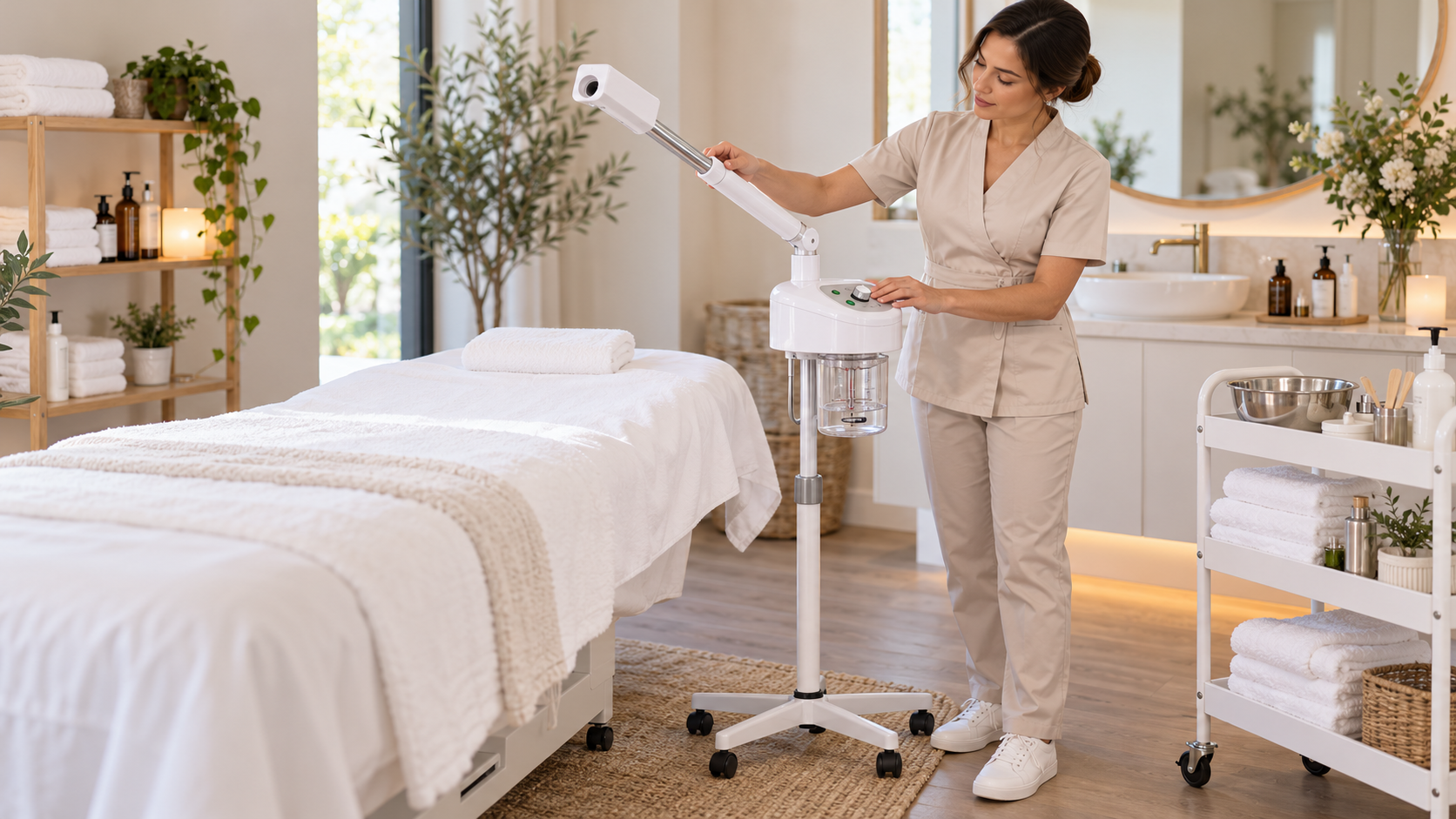
A professional facial steamer directs warm water vapor toward the treatment area. Depending on the model, it may include an adjustable arm, timer, mobile stand, or integrated magnifying lamp.
Within a facial, steaming generally serves as a preparation step. An esthetician first evaluates the client’s skin and treatment history, then decides whether warmth and moisture are appropriate before continuing with the selected service.
That decision should come before switching on the machine. A client booking a cleansing facial may tolerate steaming comfortably, while another receiving the same service may need an approach without heat.
A useful question is: what purpose will steam serve during this appointment? If the answer is unclear, it does not need to be included. A well-planned facial can be complete without steaming, and omitting an unsuitable step demonstrates thoughtful treatment planning.
Facial Steamer Benefits for Skin Preparation
One practical benefit of facial steaming is softening the skin and loosening oil and buildup before appropriate extractions. Cleveland Clinic describes this use in its guidance on facial steaming, explaining that steam can help prepare blackhead plugs for removal. This is clinical guidance, rather than a controlled trial proving that every client needs steam.
For estheticians, the important distinction is between preparation and extraction itself. Steam does not replace technique, professional judgment, or deciding whether an area should be treated.
If a blockage does not release readily, adding more heat or pressure is not a suitable response. Reassess the skin and the treatment instead of treating steaming as permission to continue.
Client-facing explanations can remain simple. Describing steam as a way to soften skin before the next suitable treatment step is more useful than promising a “deep detox.” Keep the explanation specific to what you intend to do during that appointment.
Temporary Hydration and a Comfortable Facial Experience
Cleveland Clinic also describes temporary hydration and increased receptiveness to topical products among the potential effects of facial steaming. However, those effects should not be presented as proof of lasting barrier repair or as a reason to combine steam with every active ingredient.
Keep the entire treatment in mind. Follow the instructions for both the machine and the skin-care products, and do not assume that increasing product penetration is always desirable.
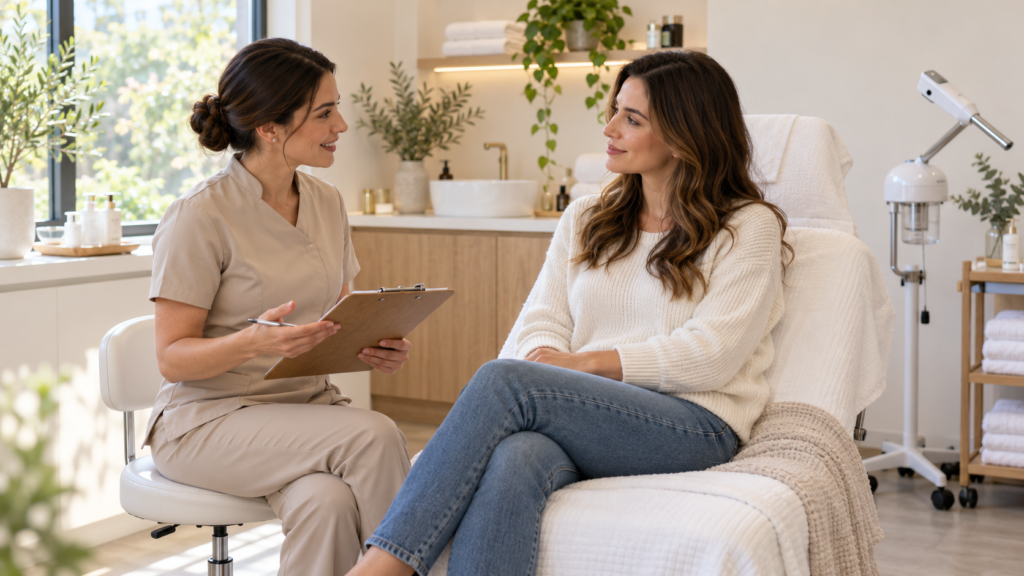
Some clients may enjoy gentle warmth as part of a facial. Others may find humidity unpleasant or feel uncomfortable when vapor approaches their face. Ask about their preferences before beginning, explain that they can request a change, and continue checking their comfort.
A relaxing service comes from attentive care, comfortable positioning, and clear communication. Steam can be one optional part of that experience. It should not become a feature the client must tolerate simply because it appears on the treatment menu.
Why More Heat Does Not Mean Better Results
It can be tempting to associate stronger steam or longer exposure with a more effective facial. Research on skin barrier function gives a reason to question that assumption.
A 2022 study published in the Journal of Clinical Medicine examined water exposure and temperature in 50 healthy volunteers. Hot-water exposure increased water loss through the skin and redness. The study involved water exposure and direct temperature contact, not professional facial steaming, so it cannot establish a specific steaming time or setting. It does show why heat exposure deserves careful attention.
In practice, avoid using the size of the visible steam cloud as a measure of treatment quality. Likewise, a reservoir capable of running for an hour does not indicate that a client should receive an hour of steam.
Use the manufacturer’s directions to establish operating boundaries. Then assess whether steaming belongs in the service at all. Equipment capacity describes what the machine can do; it does not determine what an individual client needs.
When Facial Steaming May Be Unsuitable
Heat sensitivity is an important consideration during consultation. The American Academy of Dermatology identifies heat as a potential rosacea trigger and recommends avoiding overheating to help prevent flare-ups. For clients with this history, a routine steam step may conflict with their skin-care needs.
Cleveland Clinic similarly advises against steaming for people prone to rosacea or significant redness and urges caution with very sensitive skin or eczema.
Before a facial, ask about:
- Previous reactions to heat or steam.
- Current irritation, burning, or unusual sensitivity.
- Diagnosed skin conditions and relevant professional advice.
- Recent procedures and their aftercare instructions.
- The client’s comfort with warmth near the face.
These questions help you decide whether to proceed, adapt the service, or recommend further advice. Do not interpret redness as evidence that a treatment is working.
Explain any change without making the client feel they are receiving less care. A facial tailored to their needs is more appropriate than following the same equipment sequence for everyone.
Professional Features That Support Consistent Use
Once you understand where steaming fits into your services, equipment selection becomes more focused. Look for features that help staff position, operate, and maintain the unit consistently.
An adjustable arm can help accommodate different treatment beds. A stable base and suitable wheels matter when moving equipment between rooms. Clearly labeled controls make it easier to confirm settings without interrupting the appointment.
Ask how the timer works, whether the machine has low-water protection, and what its shutdown features actually control. Review the operating manual before purchasing rather than relying entirely on product photographs.
Discount Spa Equipment’s facial steamer selection includes standalone options and configurations with magnifying lamps or additional facial functions. Compare those features with the equipment already in your room. An integrated lamp may be useful for a new setup, while a separate steamer may suit an established workstation.
Extra features should have a practical purpose. They do not, by themselves, establish better skin outcomes.
Maintenance and Treatment Planning Matter Together
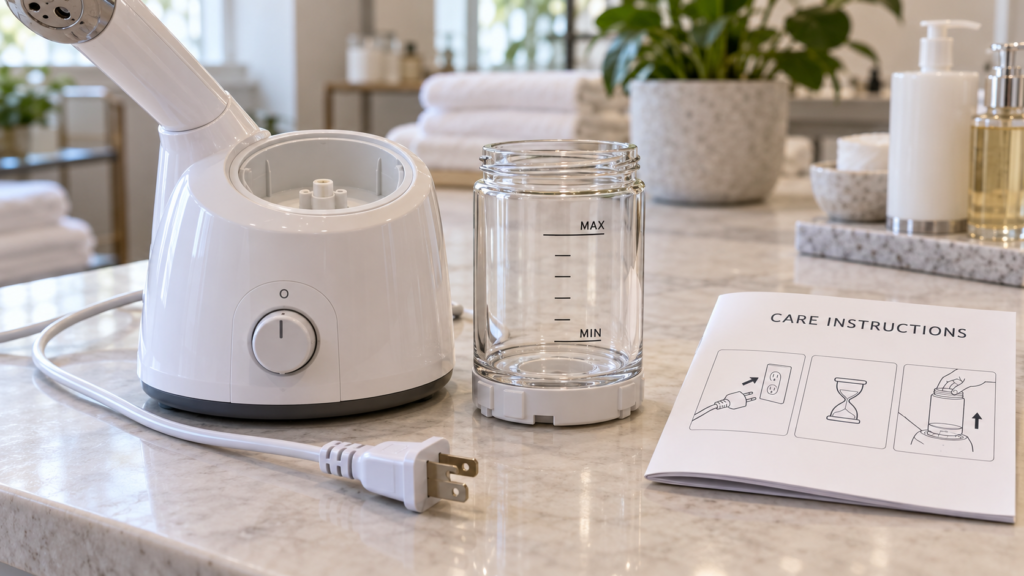
A facial steamer needs a care routine that fits your working day. Before putting a new unit into service, make sure staff understand its filling, cooling, cleaning, and storage instructions.
Use the water type specified for the exact model. Do not assume every steamer accepts the same water or cleaning method. Likewise, an aromatherapy feature does not necessarily mean oils can be added directly to the reservoir.
Build a simple equipment checklist around the manufacturer’s requirements:
- Inspect the unit and cord before use.
- Confirm the correct water level and reservoir attachment.
- Position the machine securely without obstructing movement.
- Follow shutdown and cooling instructions before handling hot components.
- Complete the prescribed cleaning and drying routine.
- Remove damaged or malfunctioning equipment from service.
Record useful treatment observations as well. Noting whether a client received steam, declined it, or experienced discomfort helps support future appointments.
Consistency comes from both equipment care and decision-making. A well-maintained machine still needs a practitioner who knows when to use it and when to leave it off.
Choose Facial Equipment With a Clear Purpose
Facial steamer benefits are most useful when discussed realistically. Steam can support skin preparation and may contribute to a comfortable facial for suitable clients. It should remain an optional, carefully selected step supported by appropriate technique, product instructions, and attention to skin response.
When choosing equipment, prioritize clear controls, stable positioning, straightforward maintenance, and features that fit your treatment room. Ask questions about the exact model rather than assuming every professional steamer works the same way.
Explore spa and salon equipment at Discount Spa Equipment. Compare facial steamers and related treatment-room essentials, then contact the team to confirm specifications and care requirements before selecting equipment for your services.


